Category Archives: Condiments

Hot Damn Zucchini Relish

It’s still full-on summer here, which is great news for condiment-addicted folks like myself.  Never is there a greater opportunity to slather grilled vegetables, meats and other delights in sinfully amazing concoctions, then there is during barbecue season.  I would argue, in fact, that most of what I prepare in the summer is merely a vehicle to transport mustards, relishes, marinades and dressings into my waiting tummy.

To that end I present Hot Damn Zucchini Relish, an infinitely tweakable, locally adaptable colourful topper that makes my mouth water just thinking about it.

Babble-free recipe: Cackle Fruit Hot Damn Zucchini Relish (PDF)

Normally I would do mine with a scotch bonnet pepper, but I acknowledge the fact that searing your esophagus and giggling through capsaicin-induced tears is not everyone’s idea of a good time, so I’ve lowered the heat a bit and changed the flavour by using pre-pickled (guess I’m out of the canners guild…) peperoncini.  If you’re feeling adventurous, give the scotch bonnet a try, but start at a low dose, say half a pepper per batch since these puppies are at least 10x hotter than the hottest jalapeño, which is about 10x hotter than the friendly peperoncini’s used in this version.

In Prep — Your Grocery List

** this relish is actually a semi-negligent two day process.  Day 1 involves the salting, and Day 2 involves the processing, so plan accordingly!

  • 7 medium sized zucchini, either yellow or green or a combination
  • 1 large sweet bell pepper (orange, yellow or red, your choice)
  • 1 large onion
  • 3-4 pickled peperoncini peppers, or any variety of hot pepper depending on your tolerance
  • 1/4 cup pickling or Kosher salt
  • 1 1/4 cup good old white sugar
  • 1 1/2 tsp. each of ground nutmeg and turmeric

This slideshow requires JavaScript.

Chop your zucchini, pepper and onion into small bits and toss them into a big bowl.  If you find texture offensive, finely dice them, but if you’re like me and don’t mind things a little chunky (take that as you may) you can keep the pieces a bit bigger and slightly irregular.  The bowl should look like Carnivale in food form.  The more colourful your mix of raw veggies, the more interesting looking your relish will be.  I tend to use combos of green and yellow zucchini, orange and yellow bell peppers and white onions, though red would be kinda neat as well.  You will be tempted to eat it raw at this point, so delicious is its appearance and crunchy nature.  Resist.  Keep your focus.  Relish, relish, relish.  Sprinkle the chopped veggies with the salt, mix it well, and then just cover up the bowl and throw it into the fridge overnight.

When you take it out the next day, you should see a pool of greenish-yellow liquid that’s been leeched out of the veggies by the salt.  Put the veggies in a colander and press them lightly to wring out as much liquid as possible.  Do NOT mash them to a pulp or your relish will just be an insipid mess.  Put the drained veggies in a pot with the sugar, nutmeg, turmeric, and diced hot peppers and bring to a boil.  Reduce to medium heat and cook until the relish starts to thicken (around 45 mins).  Better to keep the temperature down and take longer during the cooking process than to have the heat too high and end up scorching some of the sugar.  No one likes that taste, especially on a hot dog.

Ladle your creation into jars, follow the standard lock and load canning procedure (post forthcoming in the near future) and process in boiling water for 15 mins.  Keep in a cool spot, like the fridge or cellar, for months, though I’m pretty sure it’s never going to last that long.
Tagged , , , ,

Hhhhh-hi Hhhhh-honey Mustard

A lot of times I wonder if I don’t love food simply because it’s a vehicle to ingest delicious, delicious condiments, particularly condiments of the vinegary variety.  If you were to open my fridge right this very second, and calculate the ratio of sauces:actual food items, your number would be very large.  Mustard is one of my all time favourites.  Everything from the nuclear yellow French’s prepared mustard (which I’m tempted to each with a spoon), to grainy artisan fancy pants moutard.

I found a recipe for roasted garlic-lemon-honey mustard and I thought “now there’s a first date food just waiting to be prepared”, so off I went.  Here’s a concise little PDF of the recipe to help you on your way, or if you refuse to read my meandering commentary:

Cackle Fruit — Hhhhh-hi Hhhhh-honey Mustard (PDF).

Here’s what you’ll need:

Roasted Garlic & Lemon Mustard

INGREDIENTS

  • 3/4 cup dry white wine
  • 3/4 cup mustard seeds
  • 2 – 3 bulbs of garlic
  • olive oil
  • 1 and 1/4 cup white wine vinegar
  • 2 large lemons for both zest (zest first!) and juice  (2/3 cup)
  • 1/4 cup local honey
  • 1/2 tsp Kosher salt
  • garlic powder and dry mustard powder, for adjustments (optional)

Apologies for the “grainy” pictures, it’s not my attempt at a terrible food pun, it’s the last dying gasps of my faithful iPhone.  I promise it’ll get better!  There are basically two main parts to this recipe, which take a bit of time.  The first is soaking your mustard seeds, the second is roasting your garlic.

Seemingly Random Tip #1: Do NOT make this recipe within 24 hours of expecting company at your house.  Roasting 2-3 full hunks of garlic, mashing it, and blending it makes delicious mustard, but a very garlicky kitchen.

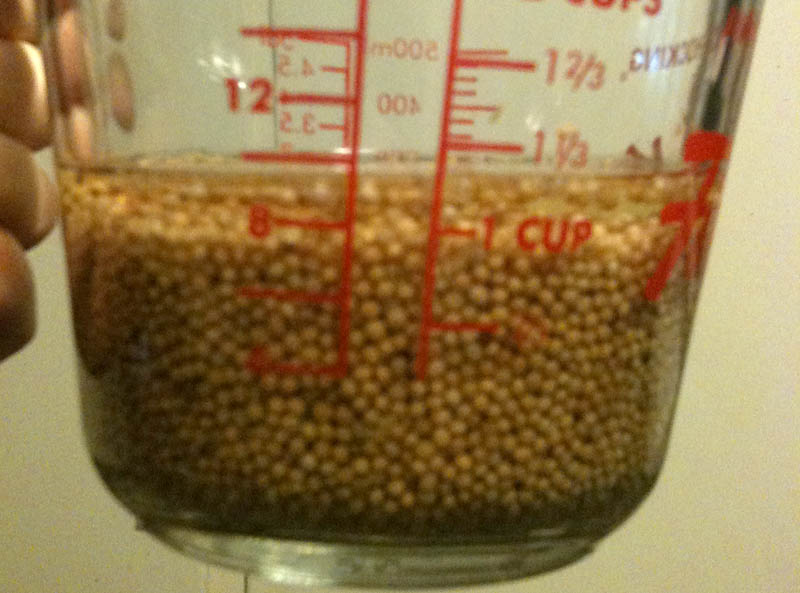
Wine is almost completely absorbed.

Soaking the mustard seeds can take anywhere from 2 hours to overnight, so if you’re a planner (I’m certainly not) and can predict when you’re going to have the sudden urge to do some canning, combine 1 1/4 cup of dry white wine with 3/4 cups of mustard seeds the day before.  I only had yellow mustard seeds, but for a really neat looking grainy mustard, you can blend yellow and brown.  Like magic, the mustard seeds will slowly absorb the wine.  Let it sit until most of the wine has been soaked up.  I’ve found that it’s usually very close by the time you prep, roast, and cool your garlic and get your lids and jars sterilized.

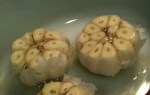
Garlic, pre-roasting.

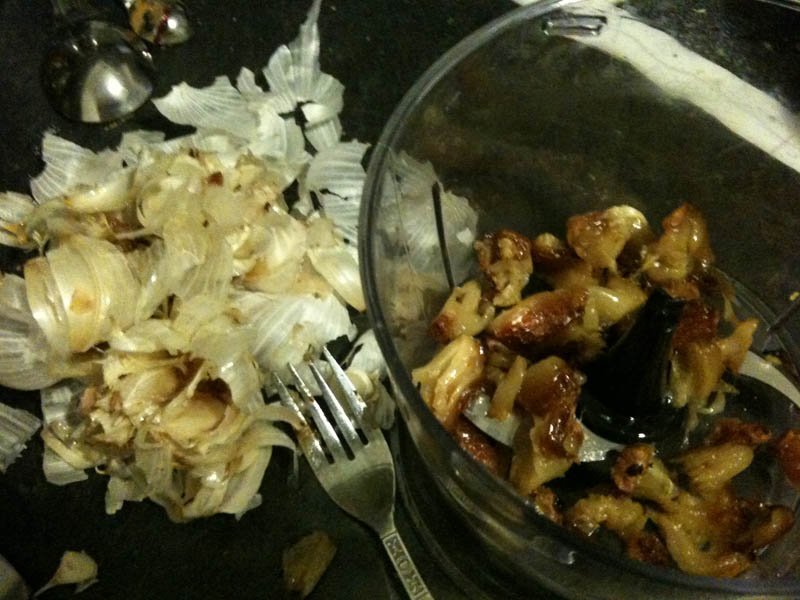
Garlic, post-roasting.

Start in on the garlic by chopping the pointy top off to expose the individual cloves, and then peel as many layers of the skin off the sides as you can without risking structural integrity.  Pop the de-nuded bulbs in an oven-safe dish, drizzle them with just enough olive oil to coat them, and put them in a pre-heated 350F oven.  I like a lot of garlic, so I did 3 whole bulbs rather than 2, but you can adjust according to your own taste.  Roast it for 45 minutes, have a peek.  If it’s gone deliciously dark brown and smells incredibly sexy, it’s good to go.  If not, keep roasting in 15 minute increments until it looks like the post-roasting picture above.  Take it out of the oven and let it cool on the counter for a while before trying to handle it.

The smell really is incredible.

Garlic + Vinegar

Once it’s cooled enough for you to pick it up, remove each of the cloves and put them in a food processor/blender.  I’ve tried the “squeeze them out like they’re toothpaste” method with decent success, but really the easiest, least messy way to get them out is with a fork.   Add in 1/2 cup of vinegar and blend the garlic into a smooth paste that smells like heaven.  Add in the wine-soaked mustard seeds, 2/3 cup of lemon juice (use fresh lemons and zest them first so that you can use the zest later), 3/4 cup of vinegar and blend to your desired level of graininess.  It’s all about consistency here folks, and it’s an individual thing, so make your mustard the way you want it.  I love whole grain, so I didn’t mangle the poor seeds until they were unrecognizable, but just enough to bust them up a bit.

Pour your almost-mustard into a saucepan, add in the honey and salt, and simmer over medium heat, stirring constantly until it starts to thicken up into something resembling the consistency of French’s mustard. Stir in the zest from those fresh lemons you juiced earlier and cook for another minute or so. Taste it.  If it’s not mustardy enough, you can use some dry mustard powder to spruce it up a bit.  If for some bizarre reason it’s not garlicky enough, you can cheat with a bit of garlic powder.  Not sweet enough? More honey.  I won’t tell.

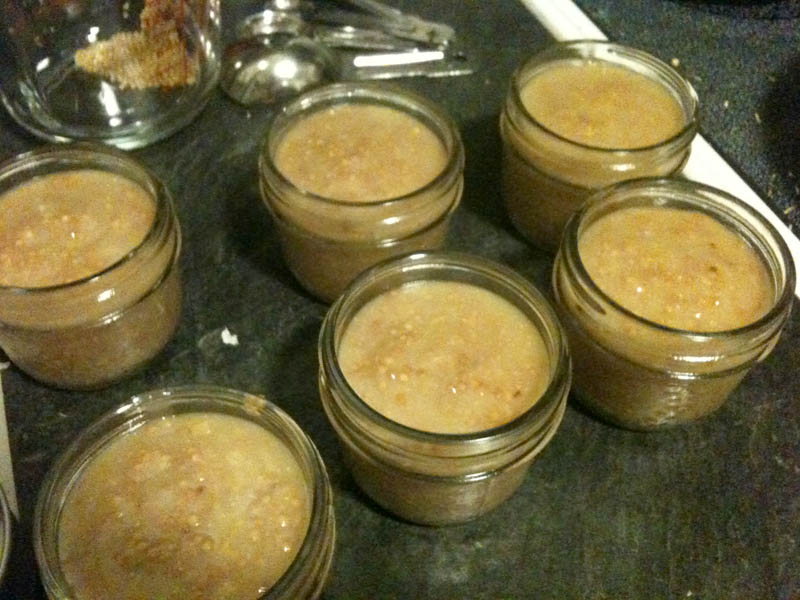
Grainy goodness.

Once it tastes the way you want, fill your sterilized jars, wipe and lid them, and process them in your boiling water canner for 15 minutes.  Remember to take them out at the end without tipping them, and upon cooling you should hear a ‘POP’ as the seal is formed.  If your lid doesn’t have an indent in the middle, it didn’t seal properly, so you’ll have to reprocess that particular jar.  I followed the recipe, used 3 full garlic bulbs and ended up with 6 x 125 jars of awesome.

Original recipe from Pinterest.